

What is LCA – and what is the difference between LCA and EPD?
How can we know the environmental impact of a product throughout its life cycle? A life cycle assessment (LCA) provides insight into the environmental impact from raw materials and production to use and disposal. But how does an LCA work, and what makes it different from an EPD?
In short
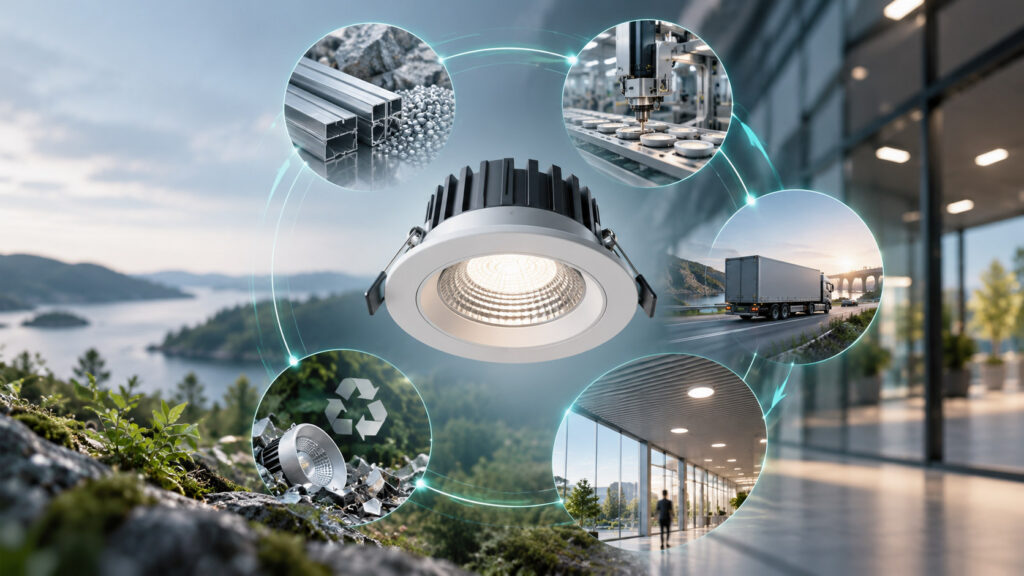
LCA (Life Cycle Assessment) is a method for mapping and calculating the environmental impact of a product throughout its entire or defined parts of its life cycle. The analysis can show where the greatest environmental impact occurs, and where improvements can have the greatest effect. An EPD (Environmental Product Declaration) is a standardized and third-party verified environmental declaration based on an LCA.
What is LCA?
LCA stands for Life Cycle Assessment, also called life cycle analysis or life cycle assessment. It is a systematic method for assessing the environmental impact of a product, service or system throughout its life cycle.
Instead of examining just the production itself, an LCA looks at several parts of the value chain. This can include the extraction of raw materials, the manufacture of materials, production, transportation, use, maintenance and treatment when the product is no longer needed.
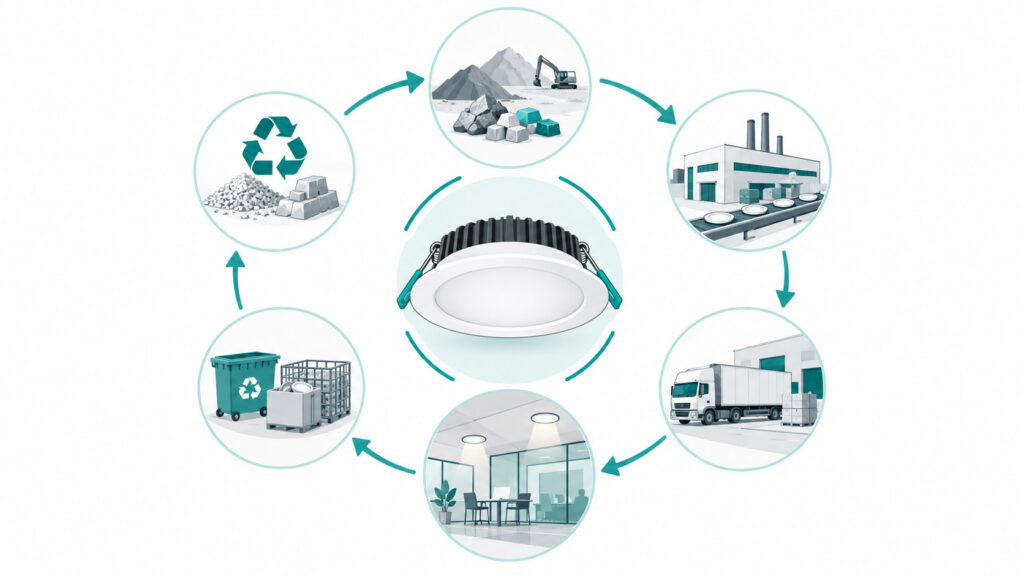
The purpose is to get a more holistic picture of the environmental impact. For example, a product may have relatively low emissions during production, but high energy consumption during the use phase. Another product may require more resources to produce, but use less energy throughout its life.
By examining multiple life cycle phases, the analysis can help ensure that environmental improvements do not simply shift the burden from one phase to another.
The method is based on the international standards ISO 14040 and ISO 14044.
How is a life cycle analysis carried out?
An LCA is normally carried out in four main phases.
Objectives and scope: First, define what the analysis will examine, which life cycle phases will be included, and which function or quantity of the product the results will be linked to.
Data collection: Then, material consumption, energy use, transport, resource use and emissions are mapped within the selected system boundaries.
Calculation of environmental impact: The data basis is used to calculate potential environmental impact within relevant environmental categories.
Interpretation of the results: Finally, it is assessed which processes and life cycle phases contribute most to the environmental impact, where the uncertainty lies, and which improvements may be relevant.
The quality of the results depends, among other things, on the data basis, the calculation method and the assumptions used.
What does an LCA measure?
A life cycle assessment can include several types of environmental impact. One of the most commonly used indicators is climate impact, expressed in CO₂ equivalents (CO₂-e).
CO₂ equivalents make it possible to express the contribution of different greenhouse gases in a common unit of measurement.
An LCA can also assess other environmental impacts, including resource consumption, acidification, eutrophication and impacts related to water consumption. Which indicators are included depends on the purpose and method of the analysis.
It is therefore important to distinguish between a complete life cycle analysis and a calculation that only examines climate impact. A climate footprint calculation may be based on life cycle methodology, but does not necessarily provide a complete picture of the product's other environmental impact.
What is the difference between LCA and EPD?
LCA and EPD are closely related, but have different functions.
LCA is the analysis itself. EPD is the documentation that presents the results according to specific rules.
| LCA | EPD |
|---|---|
| A method for calculating environmental impact throughout the life cycle. | A standardized environmental declaration based on an LCA. |
| Used for analysis, insight and improvement work. | Used to document and communicate environmental impact. |
| Can be conducted for internal use without publishing the results. | Follows specific standards and product category rules (PCR). |
| Can be reviewed or quality assured by independent professionals, but does not automatically become an EPD. | Verified through an established EPD scheme before publication. |
An EPD is prepared according to ISO 14025 and relevant product category rules. For construction products, EN 15804 is a key standard.
An LCA can therefore be used as a stand-alone analysis tool. If the results are to be published as an EPD, they must meet the requirements of the relevant declaration scheme.
An EPD is neither an eco-label nor a guarantee that the product is more sustainable than other alternatives. It provides documented environmental data that can be used as a basis for assessments and decisions.
Want to know more about how environmental declarations are structured and how they are used? Read our article What is an EPD – and what does it tell you about a lighting product? .
Why is LCA relevant for lighting?
For a lighting product, the environmental impact can occur in several parts of its life cycle.
One LED -luminaires often contain aluminum, plastic, glass, electronics and other components. The extraction and processing of the materials, production and transportation contribute to the product's environmental impact even before it is installed.
At the same time, the luminaire uses electricity throughout much of its lifespan. The environmental impact of the use phase depends on factors such as power, operating time, electricity mix and how the lighting is controlled.
In EPDs following EN 15804, module B6 describes energy use during operation. For lighting products, this phase can constitute a significant part of the calculated climate footprint.
This means that the product's environmental impact cannot be assessed based on material selection or production alone.
An energy-efficient luminaire combined with the right lighting design and needs-based control can reduce energy use in a specific project. Presence sensors, daylight control and dimming can help ensure that lighting only uses the necessary energy when light is actually needed.
At the same time, the solution must provide the right lighting quality. Low energy consumption is not a good result if the lighting does not meet the needs of the users or the requirements of the project.
How can LCA be used to choose better lighting solutions?
A life cycle analysis can provide valuable insight into product development and choices between different solutions.
If a large part of the environmental impact comes from the materials, it may be relevant to investigate material selection, product weight, production processes and possibilities for repair or material recycling.
If energy use in the operational phase dominates, measures such as higher energy efficiency, optimized light distribution and smarter lighting control may be more significant.
LCA can thus help prioritize measures where they have the greatest expected effect.
It is still important to compare solutions that meet the same needs. Two luminaires may have different light output, power, light distribution and lifespan. A single CO₂-e number per luminaire therefore does not necessarily provide a basis for determining which solution has the lowest overall climate footprint.
In a lighting project, environmental data should be considered along with lighting calculations, product lifespan, energy use and planned operation, among other things.
How does Norlux use LCA and EPD?
Norlux works with life-cycle-based climate calculations and product documentation to gain better insight into the environmental impact of our products.
We collect and process information about materials, product weight, energy use and transport, among other things. The data is used in the work on environmental declarations and to assess where the climate footprint occurs throughout the product's life cycle.
Internal calculations can provide valuable insight even before a potential EPD is prepared and published. At the same time, we distinguish between internal estimates and third-party verified product documentation.
For customers, EPDs provide a more verifiable basis for product selection, climate calculations and projects with specific documentation requirements.
For Norlux, the work is also about identifying opportunities for improvements in material use, product design, energy efficiency and transportation.
From product data to comprehensive lighting solutions
LCA and EPD provide important knowledge about the environmental impact of products. But when planning lighting for a building or facility, it is the overall solution that must be considered.
The right luminaire selection, lighting design, control and planned operation affect both energy use and lighting quality throughout the facility's lifetime.
Norlux combines lighting expertise with product and environmental documentation to help customers make better informed choices in lighting projects.
Frequently asked questions about LCA
Are you planning a lighting project?
Norlux helps you find lighting solutions tailored to your project's needs – from lighting design and product selection to control and documentation.